The arrival of the ship strengthens the naval blockade against the regime in Tehran and enhances the United States’ military response capabilities in the Gulf and the Red Sea
The aircraft carrier USS George H.W. Bush joined the U.S. fleet deployed in the Middle East amid tensions with Iran (CENTCOM
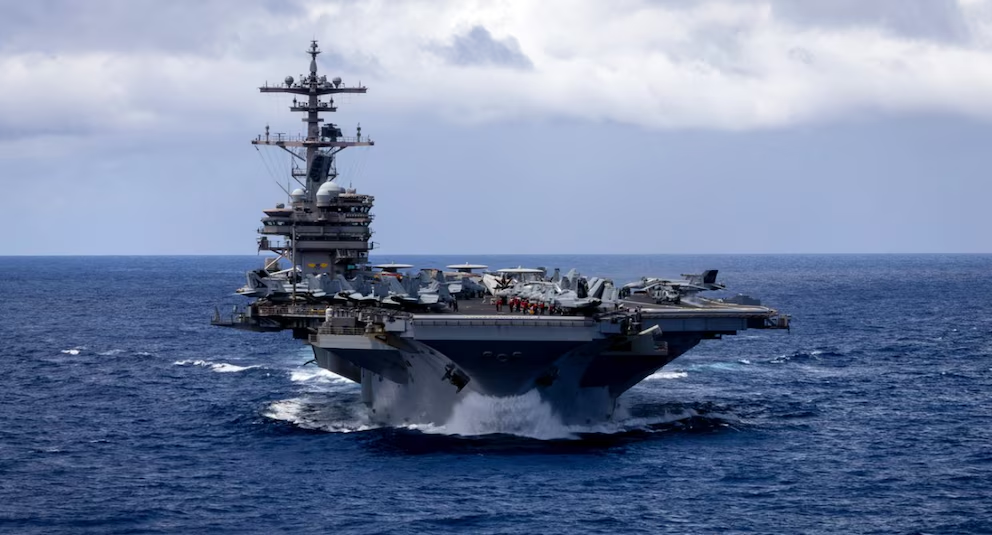
The aircraft carrier USS George H.W. Bush joined the U.S. fleet deployed in the Middle East amid tensions with Iran (CENTCOM)
The aircraft carrier USS George H.W. Bush arrived in the waters of the Middle East, bringing to three the number of such ships deployed by the United States in the region amid escalating tensions with the Iranian regime.
This development, confirmed by the military command responsible for U.S. operations in the area, comes as a fragile ceasefire holds following the joint offensive by Washington and Israel in late February.
The USS George H.W. Bush is operating in the Indian Ocean under the jurisdiction of U.S. Central Command, accompanied by a flight deck full of fighter jets ready for offensive or defensive action.
The arrival of this aircraft carrier comes on top of that of two other flagships of the U.S. Navy: the USS Gerald R. Ford, which is currently in the Red Sea, and the USS Abraham Lincoln, deployed in the Arabian Sea.
The massive deployment aims to maintain the naval blockade of Iranian ports and prevent maritime traffic that could benefit Tehran, as the United States seeks to strangle the Iranian economy and ensure control of strategic routes such as the Strait of Hormuz.
The reinforcement of the U.S. fleet comes amid a ceasefire, which was extended at Pakistan’s request while negotiations continue in an effort to find a diplomatic solution to the conflict.
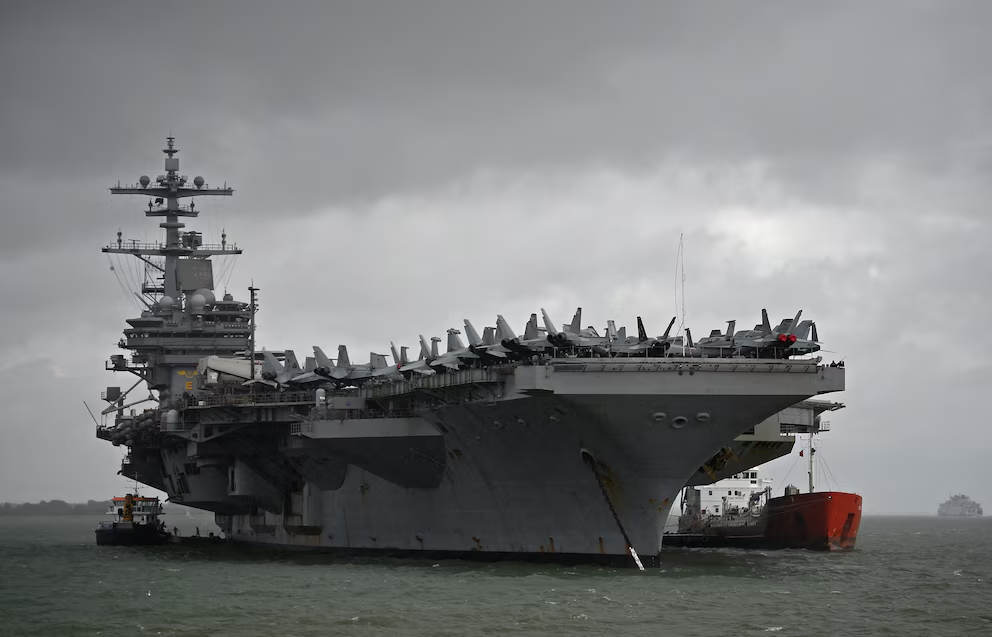
The ship’s arrival strengthens the naval blockade against the regime in Tehran and boosts the United States’ military response capabilities in the Gulf and the Red Sea (REUTERS/File)
However, the simultaneous presence of three aircraft carriers in the region signals Washington’s willingness to respond to any hostile moves and to maintain military pressure on Iran.
What is the U.S. fleet deployed in the Middle East like?
The U.S. military deployment in the Middle East is one of the most ambitious naval operations of recent decades. The core force consists of the aircraft carriers USS Abraham Lincoln, USS George H.W. Bush, and USS Gerald R. Ford, each accompanied by escort groups comprising destroyers equipped with guided missiles.
In addition, two amphibious assault ships are part of the force, carrying more than 2,000 Marines and supplies for rapid operations and boarding missions on the high seas.
The primary mission of this fleet is to block the Strait of Hormuz, a key maritime route for global oil trade. To achieve this, the United States has deployed ten Arleigh Burke-class destroyers, armed with Harpoon missiles and advanced air defense systems capable of operating at speeds exceeding 30 knots.
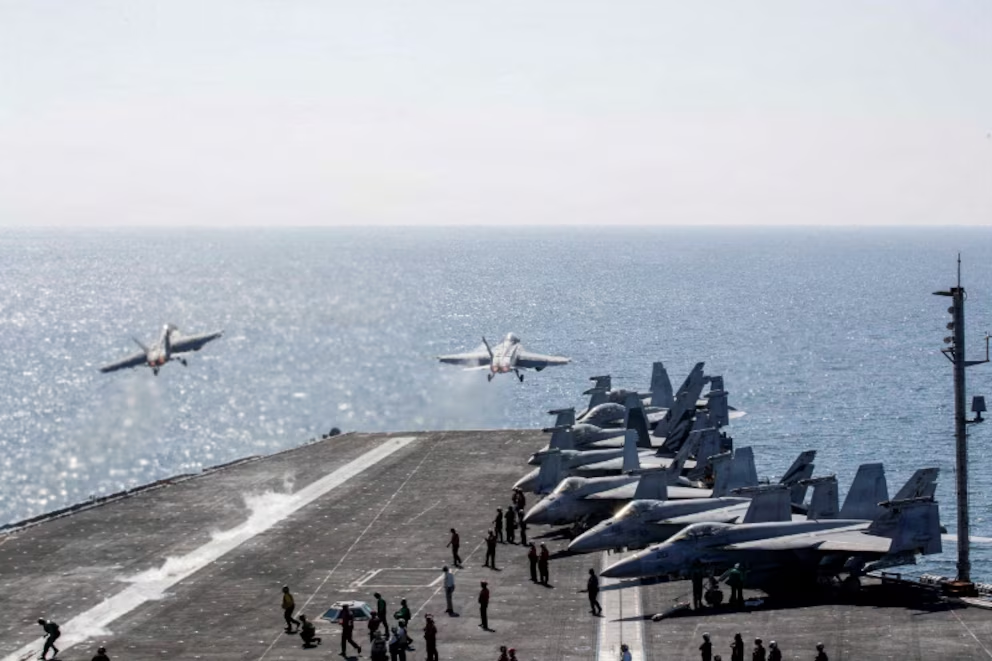
Two F/A-18 Super Hornet fighter jets take off from the aircraft carrier USS Abraham Lincoln during a U.S. military operation (REUTERS/File)
Surveillance is maintained around the clock by E-2D Hawkeye aircraft, F-35 fighters, and FA-18 Super Hornets, which patrol the area and are ready to intercept vessels at any time.
U.S. technological infrastructure is one of the cornerstones of the operation. Satellites, drones, and early-warning aircraft such as the E-3 Sentry AWACS and the P8 Poseidon, deployed at bases in the Gulf, enable the monitoring of all vessels linked to Iran. This meticulous surveillance is essential for detecting attempts to break the blockade or identifying alternative routes used by oil tankers or suspicious vessels.
This threat complicates the approach of large U.S. ships to waters near the Iranian coast. In addition, Marines and Navy special forces must be prepared to board vessels that may at times be manned by armed members of the Islamic Revolutionary Guard Corps or civilians forced to sabotage their own ships.
The presence of naval mines, mini-submarines, and portable missiles adds to the complexity of the mission.
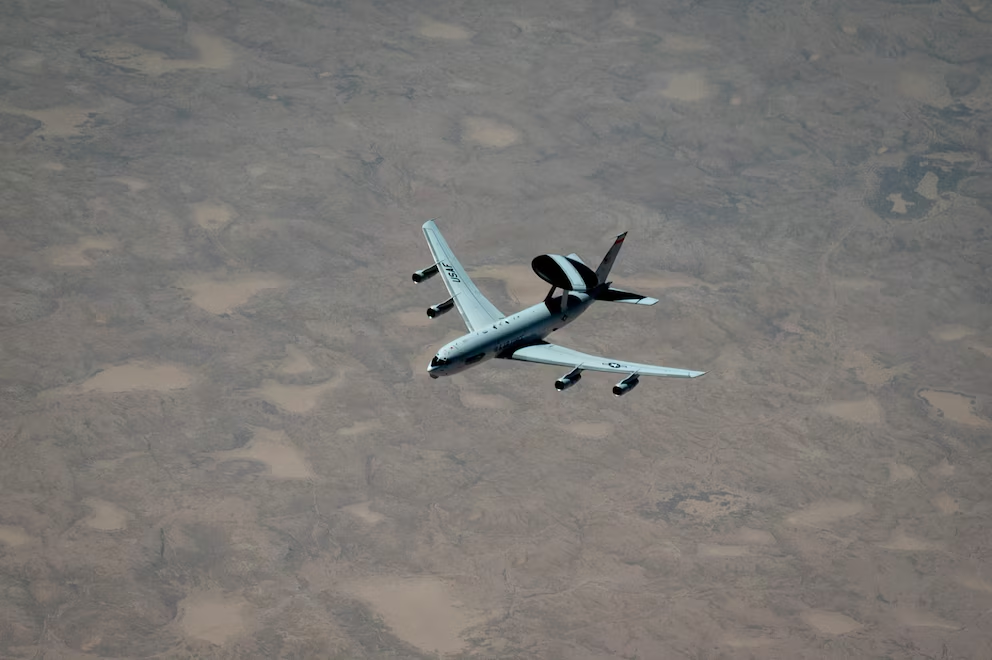
Early-warning aircraft such as the E-3 Sentry AWACS and the P-8 Poseidon, deployed at bases in the Gulf, enable the monitoring of all vessels linked to Iran (/REUTERS/File)
The current deployment reflects the United States’ determination to maintain its dominance in the Gulf and to tighten the naval blockade as a tool for exerting political and economic pressure.
The deployment of three aircraft carriers and their escort not only significantly increase the ability to respond to any threat but also aims to deter Tehran from escalating the conflict and ensure that Iranian exports remain under strict military control.
(With information from Europa Press and AFP)