
Pacific
The United States pulled its carriers back. China just published the manual for hunting them at 3,000 kilometers.
A Nanjing study maps a kill chain from Shanghai to Guam. Distance, Beijing is saying, is no longer a sanctuary.
The Rocket News · Pacific Desk · Guam / NanjingJune 23, 2026 · 8 min read
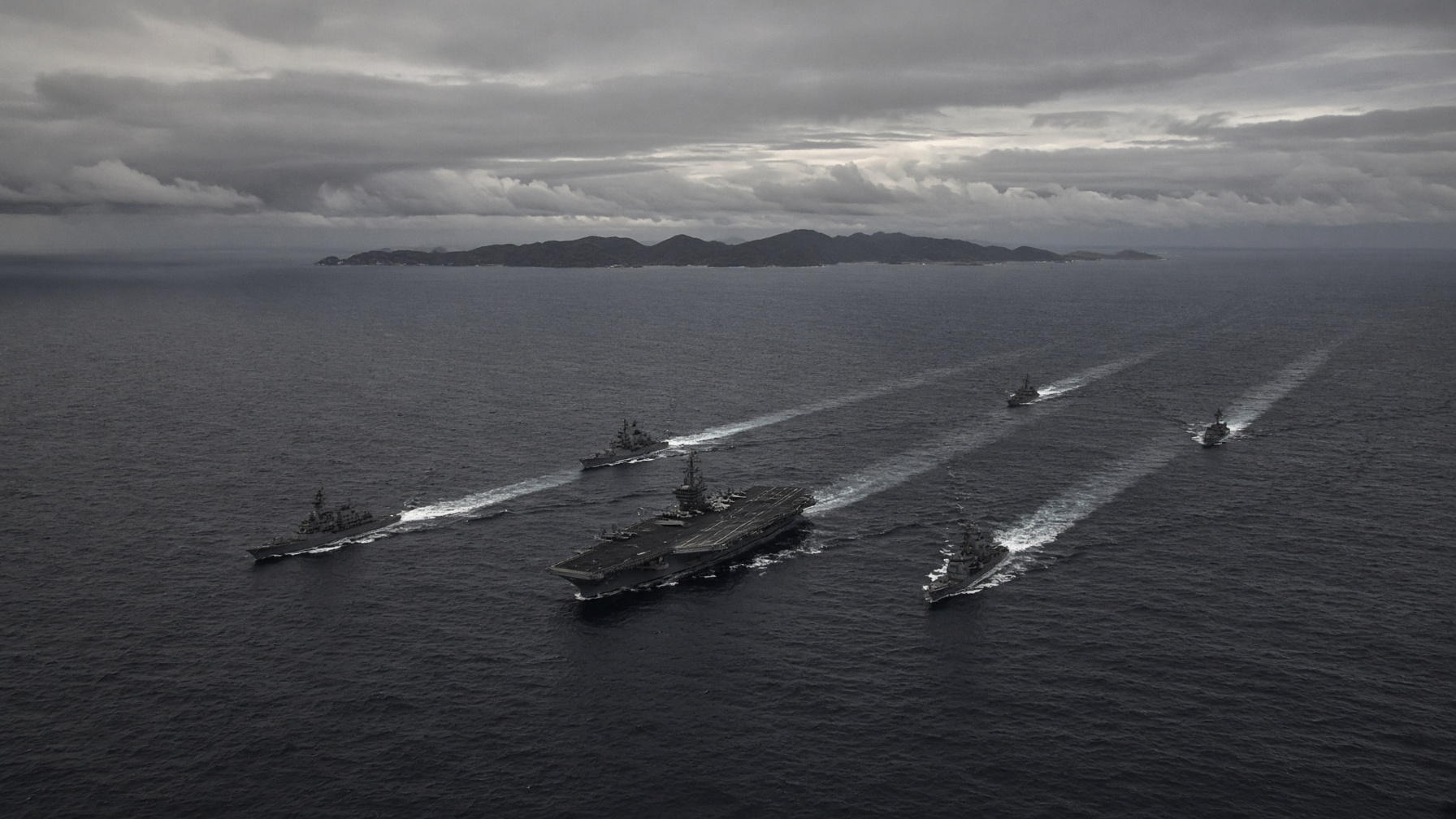
Beijing is saying something very specific to Washington: moving your aircraft carriers farther from the Asian coast does not solve the problem. It only changes its shape.
For years the American answer to China’s missile belt was geometric. Pull the big decks back. Keep them outside the densest swarms of ballistic, hypersonic, and cruise munitions. Treat Guam as a sanctuary with a runway. The reasoning sounded solid in briefings. It sounded less solid this week, after a team led by Gao Tianyun at the National University of Defense Technology in Nanjing published a study describing how to destroy a carrier strike group from 3,000 kilometers — roughly the distance from Shanghai to Guam.
Moving the carriers farther away does not solve the problem. It only changes its shape.
Video
The number is not poetry. It is a map coordinate dressed as science. The study does not advertise a miracle weapon. It describes a system: find, follow, saturate. Satellites, drones, radar aircraft, submarines, surface ships, and signals intelligence braided into a tracking chain that never lets the group go dark. Once the track is firm, the strike is not a single arrow. It is a conversation among missiles in flight — sharing data, sorting decoys from hulls, arriving from several angles at once.
The logic is not to punch through an aircraft carrier’s armor. It is to bankrupt the architecture that protects it. A U.S. strike group lives behind Aegis destroyers, interceptors, jammers, decoys, and a last line of close-in guns. All of those systems have magazines and clocks. A coordinated swarm is not required to be unstoppable. It is required to make the defense run out of time, radar picture, or missiles. Attrition, measured in seconds.
Washington dispersed its decks so it would not keep all the eggs in one basket. Nanjing’s reply is that the basket was never the point. The point is the chain that sees the basket, wherever it sails. Hiding is no longer a strategy. It is a delay.
In 1942, Japan planned the Battle of Midway convinced that distance and dispersion were advantages. The United States had already broken the plan. Four Japanese carriers were on the bottom of the Pacific in a matter of hours. Naval war has a long memory for officers who confuse the horizon with a wall.
Filed under Politics
Keep reading

The midterms
Texas opened early voting. The Senate seat can decide the chamber.
Ballots can be cast through Oct. 30. Attorney General Ken Paxton, the Republican, is against state Rep. James Talarico. A CBS News poll had the race tight, with Talarico slightly ahead.
Video · CBS19
The midterms
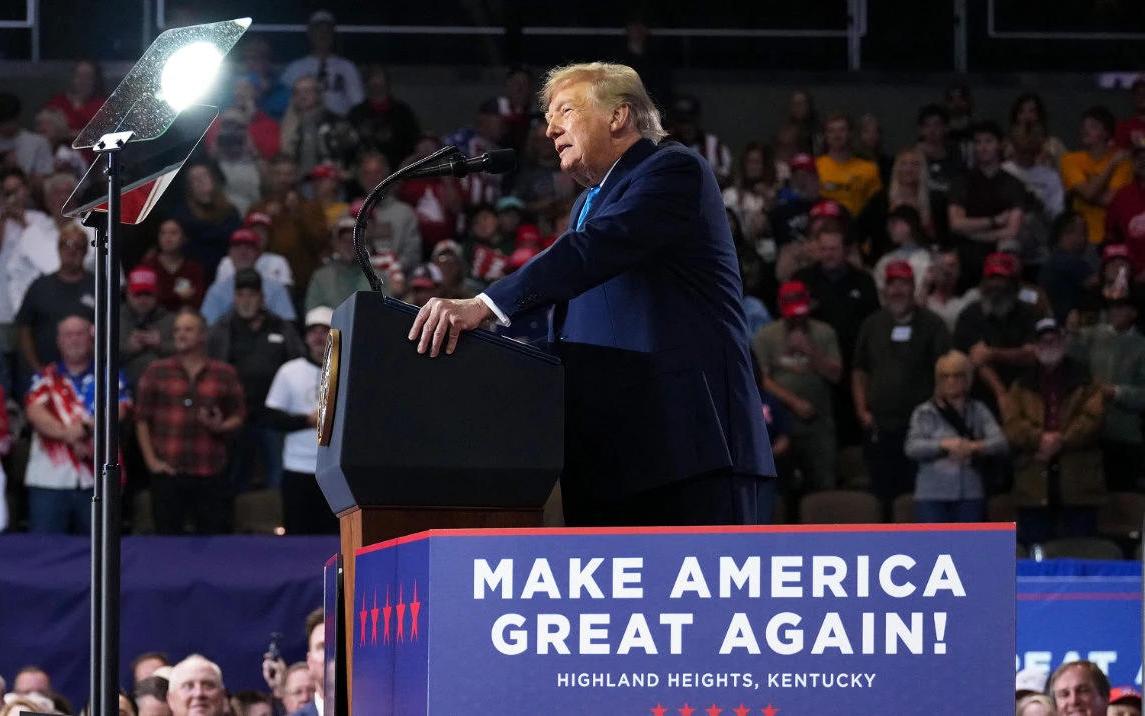
Trump told Kentucky he can do stuff that is unbelievable.
At Truist Arena in Highland Heights he said this term is “much more powerful,” asked voters to pretend he is on the ballot, and called Rep. Thomas Massie a “jerk” and a “loser.” About half the arena clapped. Half did not.
Video · Right Side Broadcasting Network
The midterms
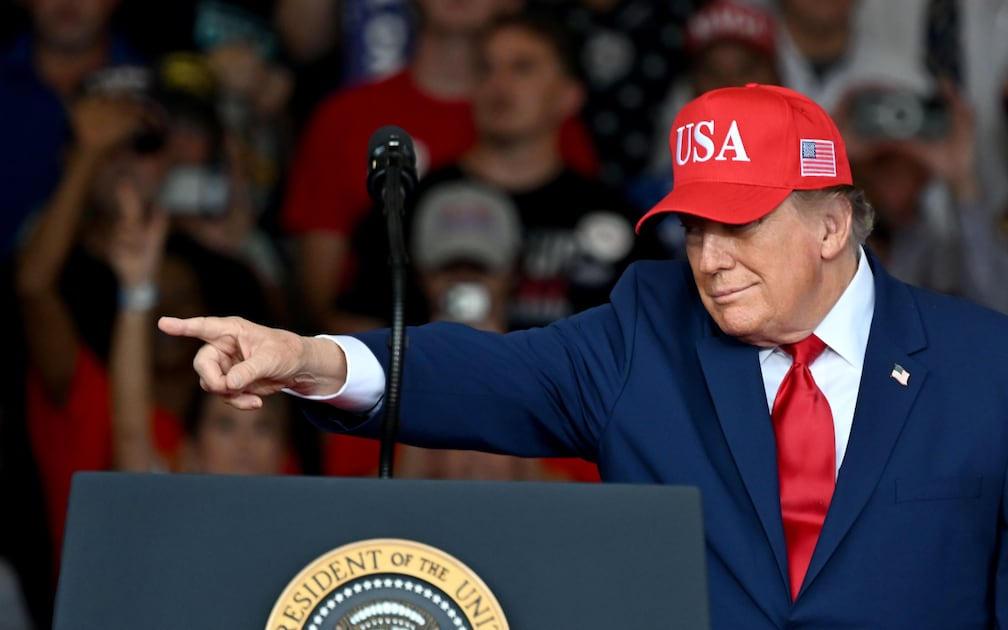
Trump told Georgia to pretend he is on the ballot.
At Dalton Municipal Airport on Friday he stood with Mike Collins and Rick Jackson. “You have to pretend I’m on the ballot,” he said. He called Sen. Jon Ossoff “Pee-wee Herman.”
Video · Forbes Breaking News